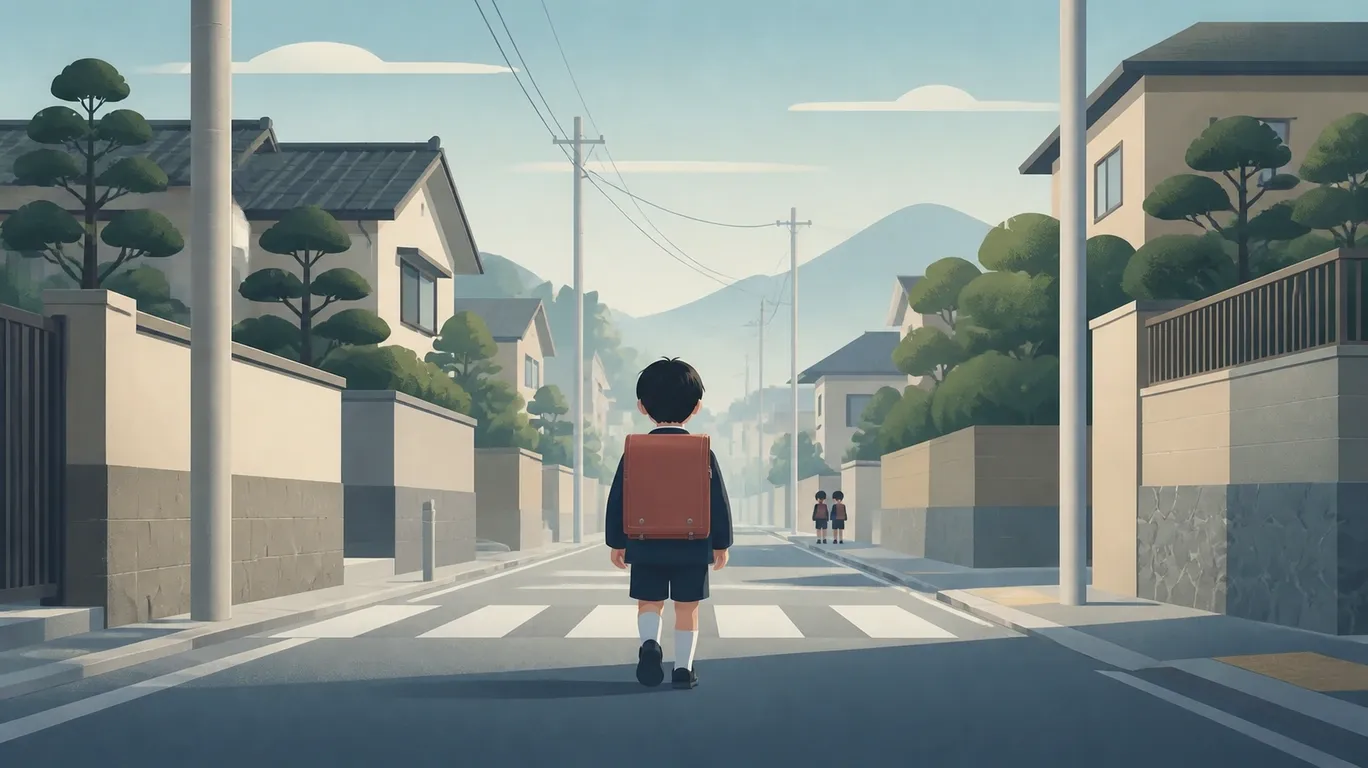
To school on their own, at six
Japanese primary school children walk to school with no adults beside them. On their back, a satchel that has to last six years.
The passage
、 。
In Japan, primary school children usually walk to school.
、 。
Even the six-year-olds in their first year: no adults go with them.
、 。
In many places the children who live nearby meet up and go all together.
、 。
In the morning, at the street corners, adults with a flag keep an eye on the children.
、 。
When the children cross, they stop the cars.
、 。
Every child carries a satchel called a randoseru on their back.
、 。
It's a bag they use every day for six years.
、 。
That's why it is so sturdy, and many cost around sixty thousand yen.
、 、 。
It used to be black for boys and red for girls.
、 。
Now there are light blue and purple ones too, and children choose the colour they like.
、 。
In the first year the randoseru looks bigger than the child.
、 。
But by the sixth it looks really small.
You've read the whole passage
In the app you can listen to it sentence by sentence, read by a Japanese voice.